

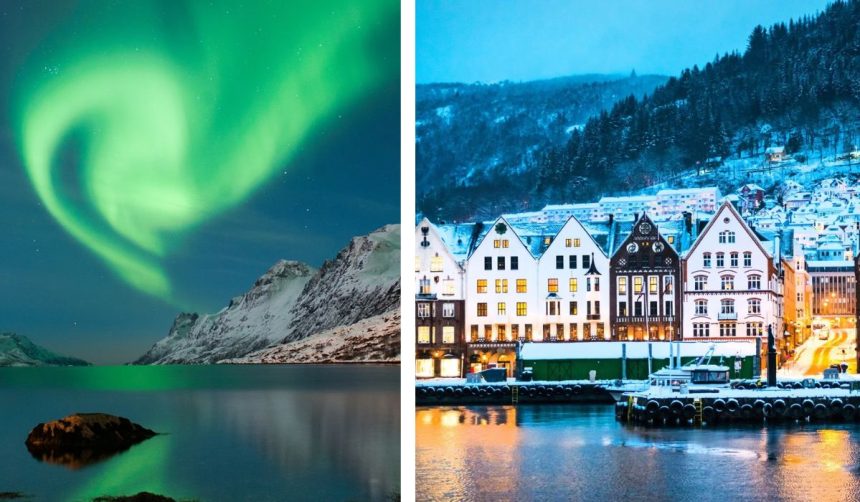
Norway is one of those places that leaves a mark on everyone who encounters it — whether through its jaw-dropping fjords, its people’s quiet warmth, or its reputation as one of the happiest and most progressive nations on earth. But Norway is more than just scenic postcards and Northern Lights. It is a living, breathing country with a rich history, a distinct language, a fascinating culture, and a modern lifestyle that many around the world aspire to understand.
Whether you’re planning a trip, researching for school, following Norway FC in international football, or simply curious about Norway’s currency, capital, or how Norwegian girls and society have shaped its global identity — this guide covers it all. Let’s take a deep dive into everything that makes Norway truly one of a kind.
Norway Country Profile: Quick Facts at a Glance
Before we explore the details, here is a snapshot of the key facts about Norway as a country:
| Official Name | Kingdom of Norway (Kongeriket Norge) |
| Norway Capital | Oslo |
| Norway Language | Norwegian (Bokmal & Nynorsk); Sami also recognized |
| Norway Currency | Norwegian Krone (NOK) |
| Population | Approximately 5.5 million (2024) |
| Area | 385,207 sq km — 67th largest country in the world |
| Government | Constitutional Monarchy & Parliamentary Democracy |
| Norway Map | Located in Northern Europe, sharing borders with Sweden, Finland, and Russia |
| HDI Rank | Consistently ranked among the top 3 globally |
| Norway FC (Football) | Member of FIFA & UEFA; national team competes in World Cup & Euro qualifiers |
Understanding Norway’s Geography: More Than Just Beautiful Scenery
If you glance at a Norway map, you will immediately notice its unusual elongated shape stretching from the far south down to well above the Arctic Circle. Norway shares the Scandinavian Peninsula with Sweden, and its western coastline is battered by the North Atlantic Ocean, giving rise to the famous Norwegian fjords — deep, glacially carved inlets that are UNESCO-listed natural wonders.
Key Geographical Features
- Fjords: Sognefjord is the longest at over 200 km; Geirangerfjord is a UNESCO World Heritage Site
- Mountains: The Scandinavian Mountains run along much of the country’s spine
- Arctic North: The Svalbard archipelago sits just 1,300 km from the North Pole
- Coastline: Norway has one of the world’s longest coastlines at over 100,000 km including all island edges
- Midnight Sun & Polar Night: Above the Arctic Circle, the sun doesn’t set in summer — and doesn’t rise in winter
This extraordinary geography is not just for tourists. It shapes Norway’s identity, its fishing industry, its hydropower infrastructure, and even the personality of its people — resilient, outdoorsy, and deeply connected to nature.
Norway Capital Oslo: A City That Balances Old and New
Oslo, Norway’s capital and largest city, is home to roughly 700,000 people — about 1 million in the greater metropolitan area. It sits at the head of the Oslofjord in southeastern Norway and serves as the country’s political, economic, and cultural heart.
Oslo is consistently ranked among the world’s most livable cities, though also among the most expensive. The city is known for world-class museums including the Viking Ship Museum, the Munch Museum (home to the iconic painting ‘The Scream’), and the Nobel Peace Center.
What Makes Oslo Stand Out
- Architecture: The Oslo Opera House lets visitors walk on its rooftop — a symbolic nod to public access
- Green Living: Oslo was European Green Capital in 2019 and aims to be carbon-neutral by 2030
- Safety: Consistently ranked one of the safest capitals in the world
- Night Life & Dining: Vibrant food scene blending New Nordic cuisine with global influences
Norway Language and Norway Currency: Practical Essentials
The Norwegian Language
The Norway language situation is unique and occasionally puzzling even to Norwegians themselves. There are two official written forms: Bokmal (meaning ‘Book Language’), used by about 85-90% of the population, and Nynorsk (meaning ‘New Norwegian’), a form created to reflect rural dialects more closely. Both are taught in schools and used in official documents.
Norwegian belongs to the North Germanic language family, making it closely related to Swedish and Danish. In fact, speakers of all three languages can generally understand each other — a phenomenon linguists call mutual intelligibility. English is widely spoken in Norway, especially among younger generations, making it one of the easiest non-English-speaking countries for international visitors to navigate.
The Norwegian Krone: Norway’s Currency
Norway’s currency is the Norwegian Krone (NOK), which translates simply to ‘Crown.’ One krone is divided into 100 ore. Norway, despite being closely integrated with the European Union through the European Economic Area (EEA) agreement, chose not to adopt the Euro — a decision driven by strong public sentiment and the country’s economic independence, largely backed by its massive sovereign wealth fund, the Government Pension Fund Global.
As of 2025, the exchange rate hovers around 1 USD = approximately 10.5-11 NOK, though this fluctuates with global markets. Visitors should expect cashless transactions to dominate in Norway, as it is one of the world’s most cashless societies.
Norwegian Culture: Society, Values, and the Role of Norwegian Women
Norwegian society is built on values of equality, trust, and collective responsibility. The concept of ‘Janteloven’ — an informal social code discouraging individuals from thinking they are better than others — runs deep in the culture, fostering humility and community over individual status.
Gender Equality and Norwegian Girls and Women
Norway is a global leader in gender equality. Norwegian girls grow up in a society where equal rights are not just theoretical but actively enforced through law and social norms. Norway was among the first countries to introduce gender quotas in corporate boardrooms, requiring at least 40% representation of each gender.
Women in Norway participate equally in the workforce, politics, and public life. Norway has had female prime ministers, and its parliament consistently ranks among the most gender-balanced in the world. This is not accidental — it is the result of decades of policy, investment in parental leave for both mothers and fathers, and a cultural commitment to shared responsibility.
Outdoor Life and ‘Friluftsliv’
The Norwegian concept of Friluftsliv — meaning ‘open-air life’ — is central to how Norwegians live. Hiking, skiing, fishing, and simply being outdoors are not just hobbies; they are a way of life ingrained from childhood. Norwegians have a legal right to roam freely in nature (Allemannsretten), reinforcing this deep bond with the land.
Norway FC: The National Football Team on the World Stage
Norway FC, officially the Norway national football team, is managed by the Norwegian Football Federation (NFF) and competes in international tournaments including FIFA World Cup and UEFA European Championship qualifiers.
The team has a rich history with some memorable moments — most notably their performances in the 1990s, when players like Ole Gunnar Solskjaer and Tore Andre Flo graced the national squad. Norway vs matches during this era drew significant global attention.
In recent years, Norway vs competitions have generated excitement thanks to a new generation of talent. Erling Haaland — widely regarded as one of the best strikers in world football — represents Norway FC with pride, and his involvement has renewed global interest in the national team’s qualifying campaigns for major tournaments.
Norway’s Football Culture
- Norwegian clubs compete in the Eliteserien, the top domestic football league
- Youth development is a priority, with strong investment in grassroots football
- Norway vs other Scandinavian nations are highly anticipated regional rivalries
- Haaland’s global stardom has significantly boosted Norway FC’s international profile
Norway’s Economy: Oil, Fish, and a Trillion-Dollar Safety Net
Norway’s economy is one of the most stable and prosperous in the world. While it has a relatively small population, its wealth per capita is extraordinary. This is largely thanks to the discovery of North Sea oil in the late 1960s, the revenues from which are managed through the Government Pension Fund Global — a sovereign wealth fund worth over 1.7 trillion USD, making it the largest of its kind on earth.
Beyond oil, Norway is a major global exporter of seafood, particularly salmon. Its fishing and aquaculture industry feeds millions across Europe and Asia. Renewable energy is also a major pillar, with over 90% of Norway’s electricity coming from hydropower.
Key economic indicators include a very low unemployment rate (typically under 4%), a high Human Development Index (HDI) score, and universal healthcare and education funded by the state.
Frequently Asked Questions About Norway
What is the capital of Norway?
The capital of Norway is Oslo. It is the country’s largest city and serves as its political, economic, and cultural center, located at the head of the Oslofjord in southeastern Norway.
What language do they speak in Norway?
The official Norway language has two written standards: Bokmal and Nynorsk. Norwegian is a North Germanic language closely related to Swedish and Danish. English is also widely spoken throughout the country, particularly among younger generations and in urban areas.
What currency does Norway use?
Norway uses the Norwegian Krone (NOK) as its currency. Despite close ties with the European Union, Norway chose not to adopt the Euro. The Krone is divided into 100 ore, and Norway operates predominantly as a cashless society.
Who are some famous Norway FC players?
Norway FC has produced several world-class footballers. Historically, Ole Gunnar Solskjaer and Tore Andre Flo were major stars. In the current era, Erling Haaland — one of the most prolific strikers in world football — is the face of the Norway national football team and has brought renewed global attention to Norway vs fixtures.
Is Norway part of the European Union?
No, Norway is not a member of the European Union, despite being a close European partner. Norway is a member of the European Economic Area (EEA) and the Schengen Area, which gives it strong economic and travel ties with the EU without full membership. This arrangement allows Norway to maintain its own currency and greater policy independence.
Conclusion: Why Norway Continues to Inspire the World
Norway is more than a country — it is a testament to what is possible when a society prioritizes its people, its environment, and its future. From the rugged beauty mapped across every corner of the Norway map, to the egalitarian values that define Norwegian women and society, to the roaring excitement of Norway FC on the football pitch — there is something here for everyone.
The Norway language carries centuries of Viking heritage and Nordic storytelling. The Norway currency tells a story of economic independence and long-term thinking. The Norway capital Oslo offers a vision of sustainable urban living. And Norway’s landscapes — from Arctic tundra to sun-soaked fjords — remind us that the natural world is worth protecting.
Whether you are planning a visit, doing research, or simply falling in love with this remarkable country from afar — we encourage you to explore Norway further. Dive into its history, follow Norway FC’s journey, learn a few words of Norwegian, and discover why this small Nordic nation consistently ranks as one of the greatest places to live, visit, and learn from.



